
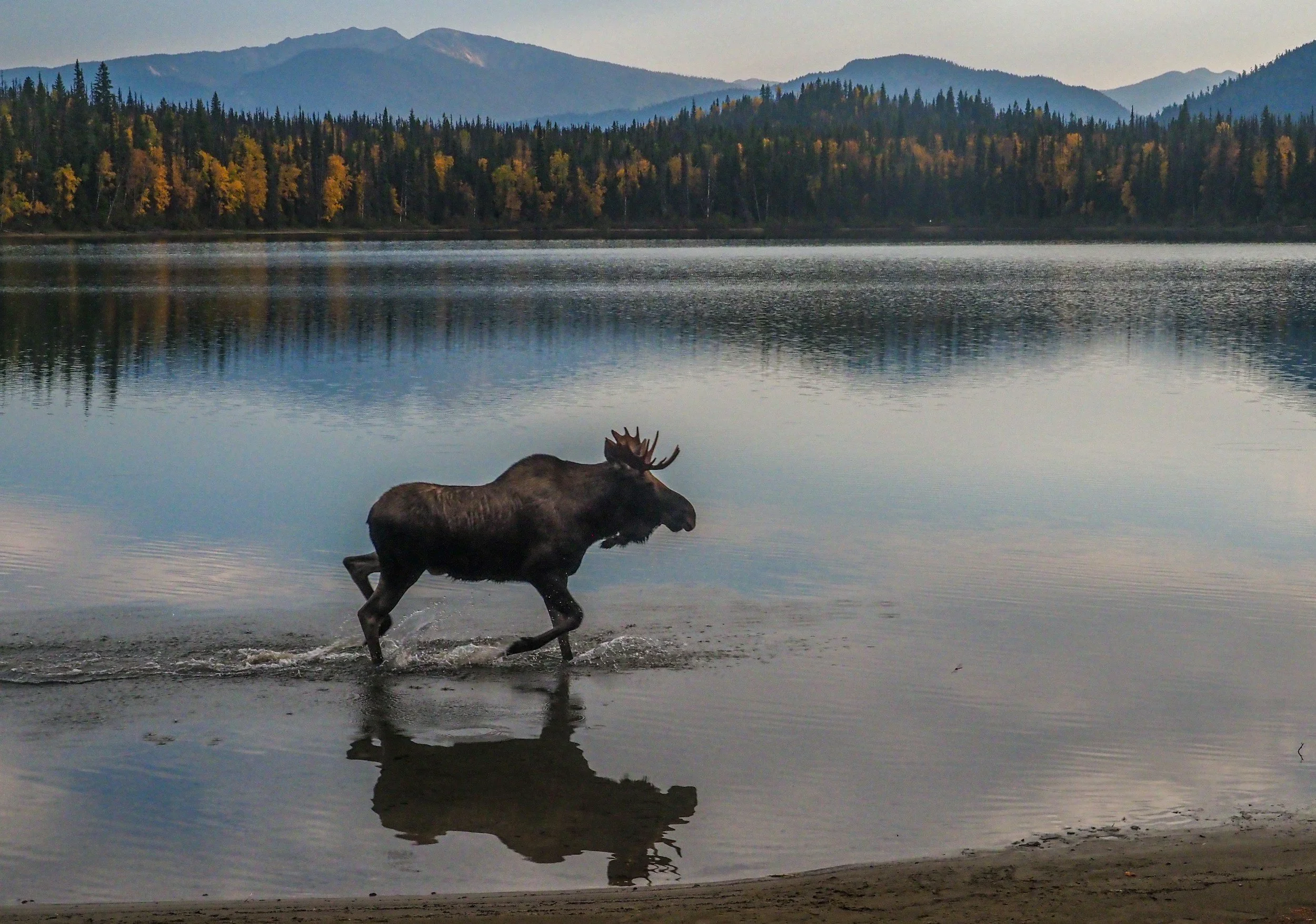
Know Your Moose
Moose are one of New Hampshire's most iconic and beloved wild residents, a symbol of the rugged, untamed nature that defines the Granite State. Scroll down to learn more about these incredible animals.
6Ft+
SHOULDER HEIGHT, ADULT BULL
1000lbs+
BULL BODY WEIGHT
40-60lbs
FOOD CONSUMED PER DAY
Habitat & Diet
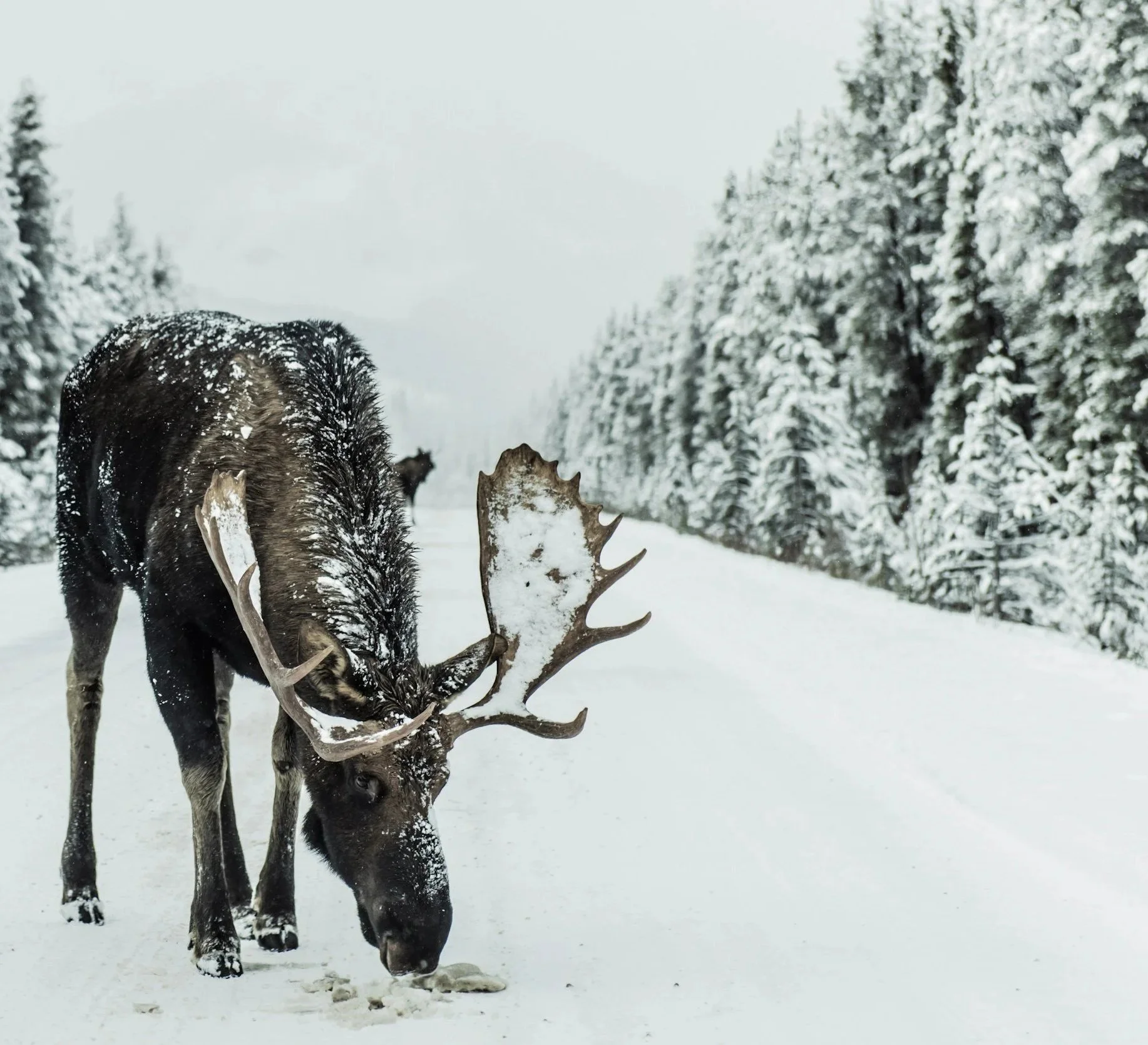
The moose that roam New Hampshire are Eastern moose — the largest member of the deer family in North America. They thrive in our northern forests and wetlands, preferring young forests filled with shrubs and new tree growth.
In summer, moose feed on leaves, twigs, and aquatic plants from ponds and marshes. In winter they rely on woody stems from birch, maple, and fir. A single adult can eat 40 to 60 pounds in one day.
As moose browse, they shape the forest — encouraging new plant growth and creating diverse habitat for birds and other wildlife. They are not just residents of the forest. They actively build it.
Behavior & Life Cycle
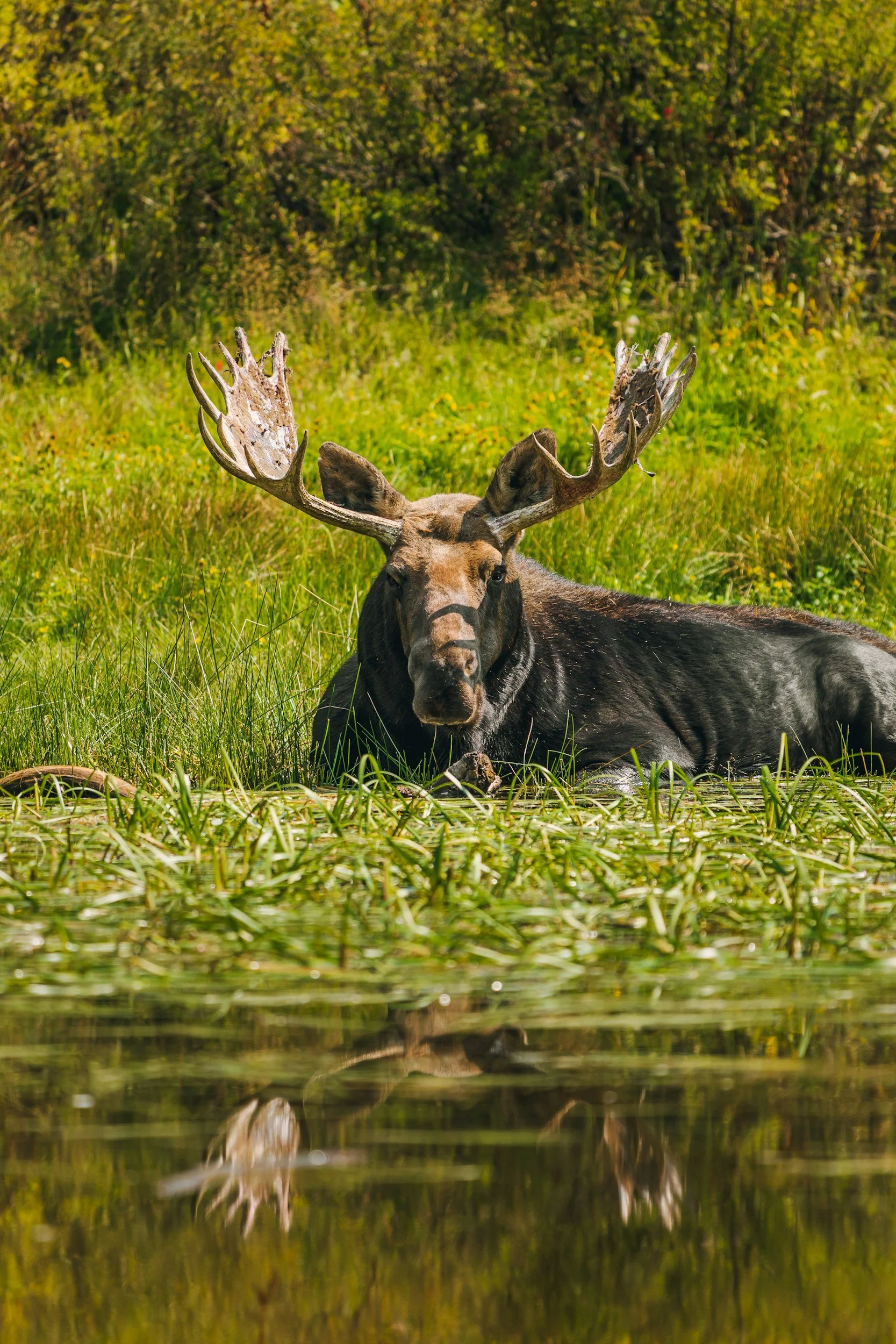
Moose spend much of summer in water. Their large bodies hold heat and they do not tolerate high temperatures well. Ponds and marshes help them cool down and provide aquatic plants rich in nutrients and sodium.
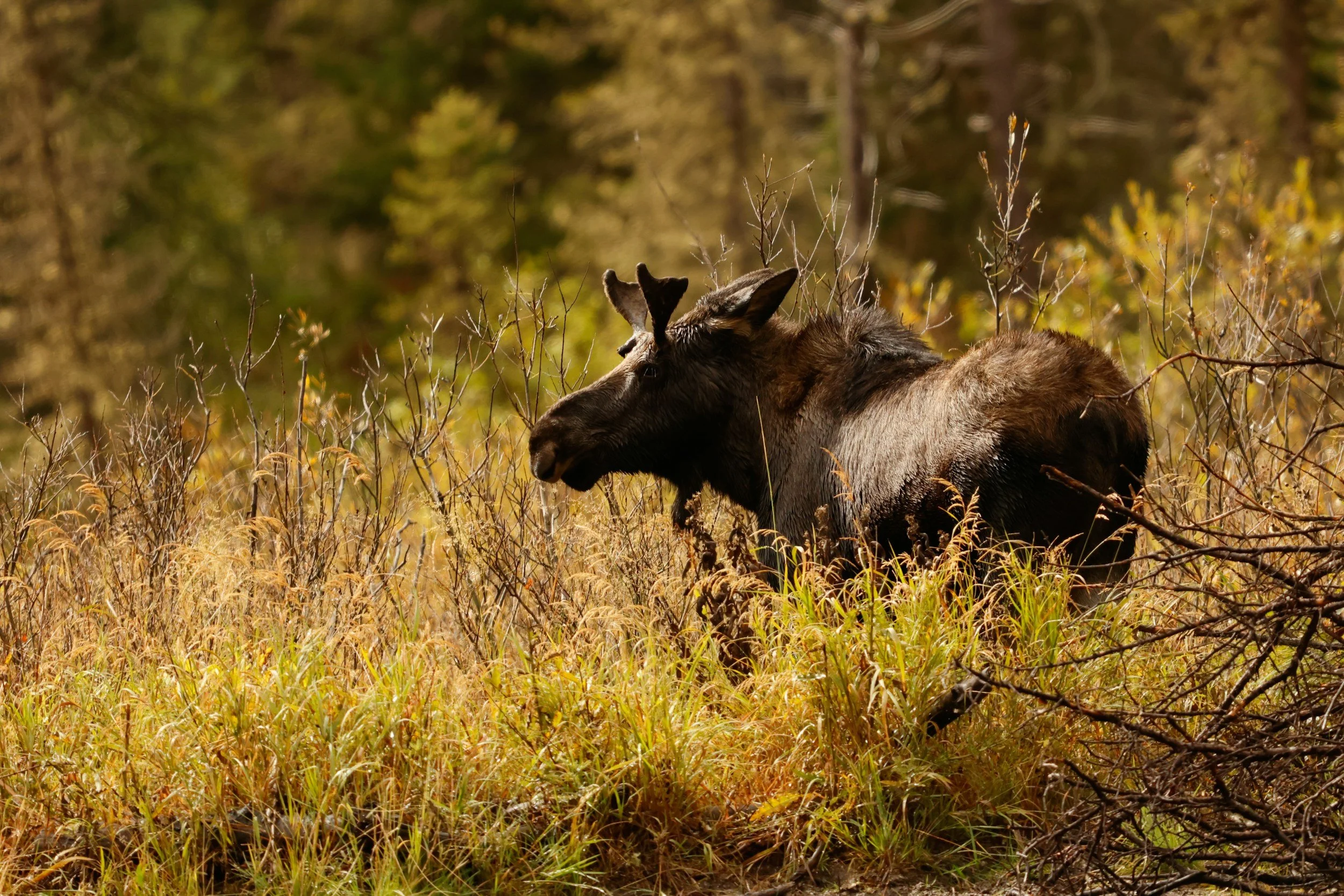
Only bulls grow antlers, cycling each year — spring velvet, late summer hardening, fall rut, winter shed. During the rut, bulls display size, make deep calls, and spar for mates.
Calves are born in late May or early June. Twins are common when food is plentiful. Within hours of birth, calves can stand and walk. They stay with their mother for the first full year, learning where to feed and how to stay alert to danger.
"If you see a moose standing quietly in a pond on a hot day, it is not just relaxing, it is regulating its body temperature and fueling up."
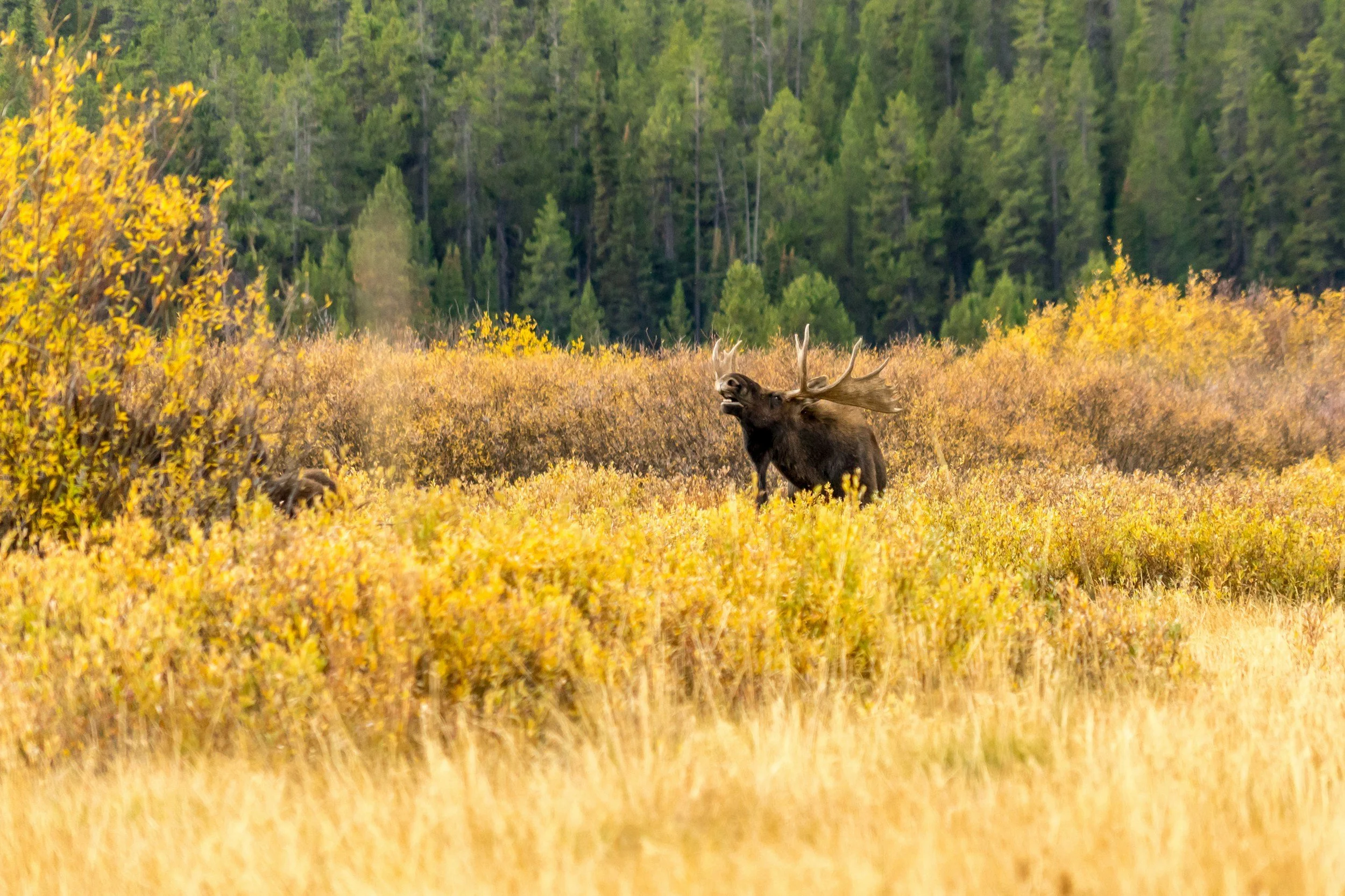
Sounds you may hear a moose make:
The rut — autumn mating season
Bulls travel vast distances searching for females. This isn't a leisurely stroll — it's an urgent, driven search that can cover miles of territory every single day.

Wide-ranging search
Bulls cover enormous ground during the rut, driven by instinct to find mates

Territory claimed
Males stake out breeding territory and defend it aggressively against rivals

Autumn only
The rut is seasonal — a narrow window when everything is on the line
How a battle plays out
1. Two bulls meet
Males stake out breeding territory and defend it aggressively against rivals
2. The rack speaks first
A more impressive rack of antlers often ends things before they start, the smaller bull backs down.
3. When neither backs down
Evenly matched bulls fight — sometimes violently. Antlers lock. Injuries happen. Rarely, neither survives.
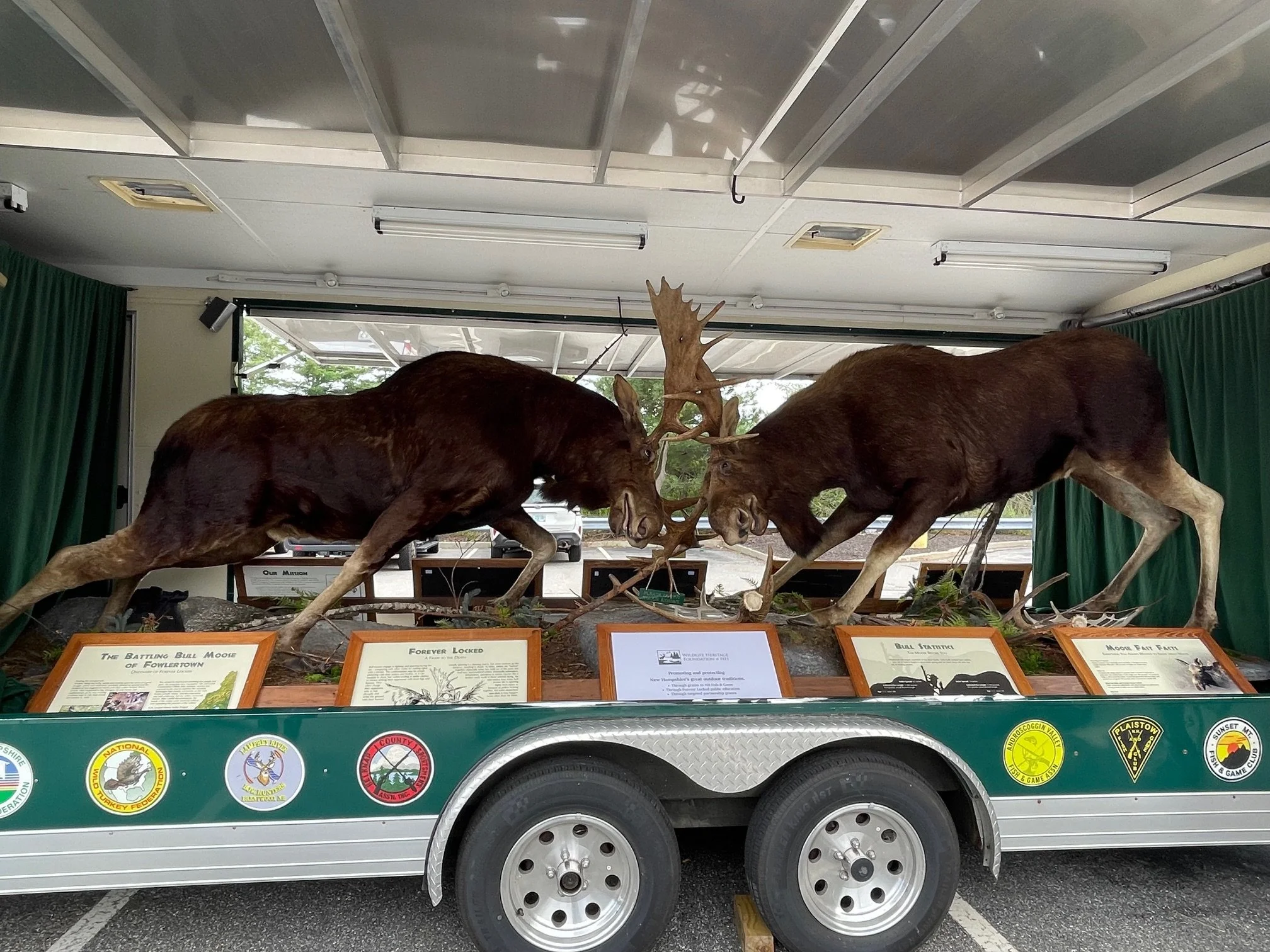
Forever Locked®
The two bulls in this exhibit almost certainly died during a mating season battle just like the one described above. A fight where neither walked away.